

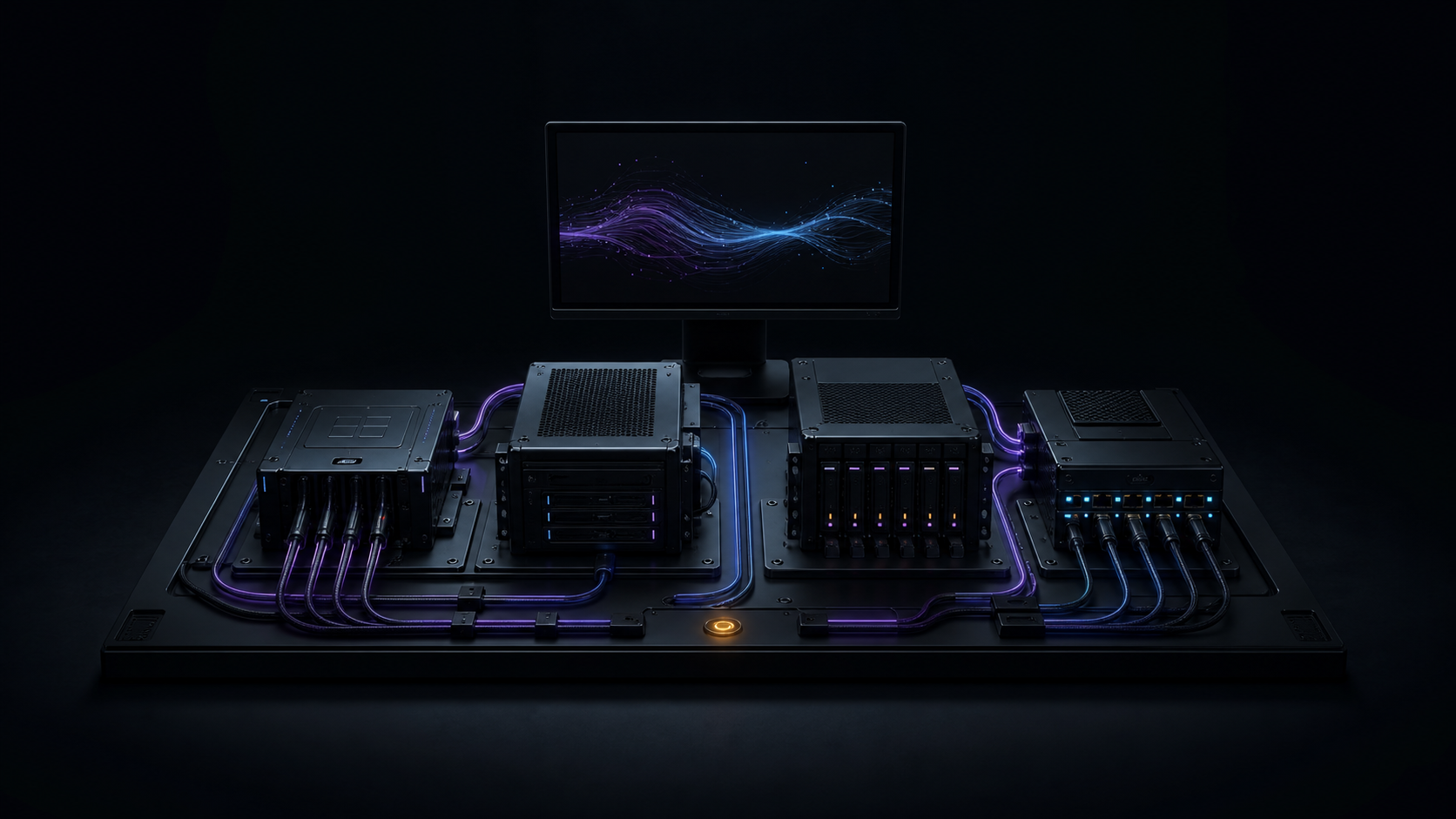
Compute, hardware and data-centre delivery for CPU- and GPU-led workloads.

Learn how we work

Buy infrastructure around the work, not a specification sheet.

When a workload is steady, owning the equipment can be the right next step. We discuss workstations, servers, storage, networking and private clusters in the context of the applications and people that depend on them.

Request a configuration
01

Work backwards from the application.

A specification is a consequence of the workflow, not the beginning of it.

Walk through one real workflow: open a typical project, move its data, run the application, produce the result and save or share the output. This exposes the components that actually need attention.

A team may focus on compute but discover that the constraint is memory, local storage, a shared file path, network transfer, a licence server or concurrent access.

  • Applications and versions
  • Representative workload
  • Users and administrators
  • Existing environment
  • Expected change
02

GPU workstations

A workstation should fit the person and the work on their screen.

GPU workstations can support visualisation, rendering, design, simulation and graphics-heavy work. The useful configuration depends on the application, files, display setup, local storage and maintenance model.

Share the software stack and a typical project so the discussion stays connected to the desk-side workflow.

03

CPU and GPU servers

Build the server around the service it will provide.

A server may be intended for rendering, AI workloads, engineering tools, virtualised workloads or an internal compute environment.

The design should account for compute, accelerators where required, memory, storage, network connectivity, access controls and the operating team.

04

Storage and networking

Compute is only one part of the system.

GPU and CPU workloads can be held back by slow storage paths, poorly planned network links or unclear access patterns.

The scope should show what will be supplied, how it connects to existing systems and what remains the responsibility of the customer or another partner.

  • Map the data path
  • Map the access path
  • Record protection and retention needs
  • Name the interface boundary
05

Private compute clusters

A cluster is an operating model, not a collection of boxes.

Private clusters suit organisations that need several machines to work as a planned environment. The conversation covers scheduling, storage, network design, security, access, monitoring and the team responsible after handover.

The first outcome may be a phased plan rather than an immediate multi-node purchase.

06

Configuration and testing

Agree what ready means before the equipment is configured.

A proposal may include equipment supply, configuration, compatibility checks, installation support or a handover process, depending on what is agreed.

The testing approach, acceptance criteria, software responsibilities and delivery boundaries belong in the project documents.

  • Application opens in the planned environment
  • Storage and network paths are reachable
  • A representative workflow can run
  • Handover information is defined

Tell us what has to run, when it has to run and for how long.

Include the software, duration, access needs and constraints you already know. If the configuration is unclear, say so.

This button opens your email app. The website does not upload or store the form entries. By sending the email, you agree that ITS INFRA INDIA may use the details to respond.

Frequently asked questions

An initial view is possible, but a responsible specification needs the workload, applications, team and operating environment.